Unit Conversions for Cooking, Travel and Science: Numbers Worth Remembering
Measurement systems differ around the world, which leads to confusion in recipes, road signs, shopping and homework. A few exact conversion factors will take you a long way.
Length
- 1 inch = 2.54 centimetres (exact)
- 1 foot = 30.48 centimetres
- 1 mile = 1.609344 kilometres
- 1 kilometre ≈ 0.621 miles
Quick estimate: miles × 1.6 = kilometres; kilometres × 0.6 = miles.
Weight (mass)
- 1 pound = 0.45359237 kilograms (exact)
- 1 ounce ≈ 28.35 grams
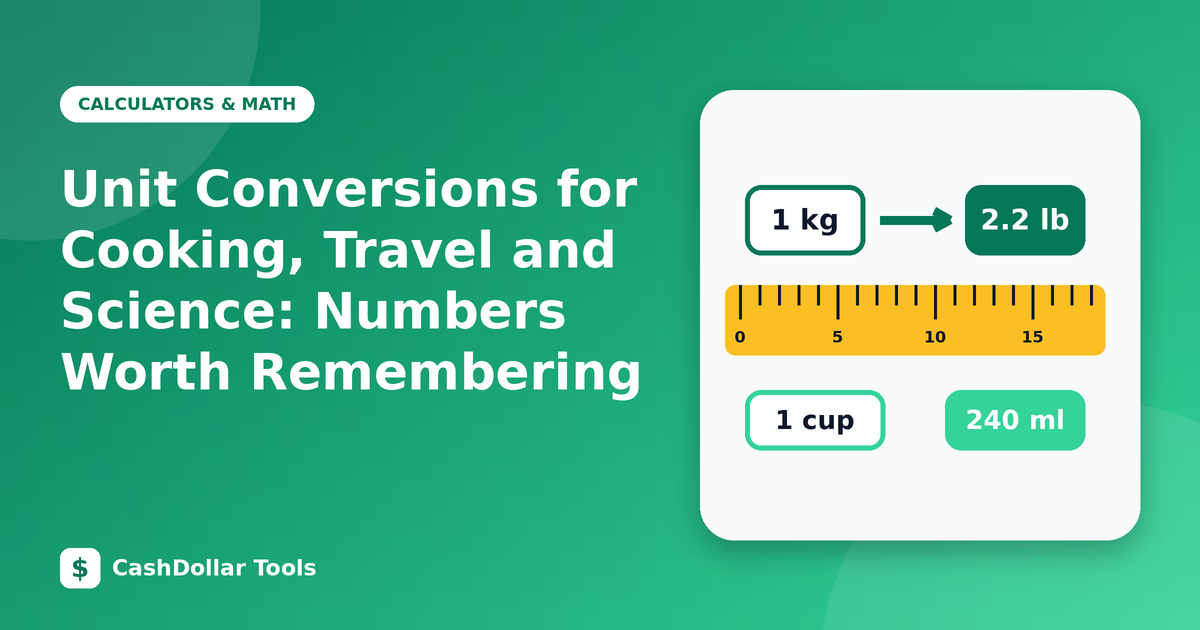
- 1 kilogram ≈ 2.2046 pounds
Volume
- 1 litre = 1,000 millilitres
- 1 US cup ≈ 236.6 millilitres (nutrition labels often use 240 ml)
- 1 US fluid ounce ≈ 29.57 millilitres
- 1 US gallon ≈ 3.785 litres
- 1 imperial (UK) gallon ≈ 4.546 litres
- 1 tablespoon = 3 teaspoons ≈ 15 ml (in many countries; Australia uses 20 ml)
Beware that a US pint (473 ml) differs from a UK pint (568 ml).
Temperature
- Celsius to Fahrenheit: °F = °C × 9 ÷ 5 + 32
- Fahrenheit to Celsius: °C = (°F − 32) × 5 ÷ 9
- Reference points: water freezes at 0 °C (32 °F) and boils at 100 °C (212 °F) at sea level; a comfortable room is about 20 to 22 °C (68 to 72 °F); oven "moderate" is about 180 °C (350 °F).
Cooking tips
Weighing ingredients in grams is more accurate than using cups, because a cup of flour can vary in weight depending on how it is packed. Use a kitchen scale when baking. When converting oven temperatures, remember that fan ovens usually run hotter, so reduce the temperature by about 20 °C unless the recipe says otherwise.
Travel tips
Speed limits in kilometres per hour feel higher than in miles per hour; 100 km/h is about 62 mph. Fuel is sold per litre or per gallon, so compare using price per litre. For clothing sizes, there is no single formula. Use the brand's size chart.
Science and school
Stick to SI units (metres, kilograms, seconds, kelvin) in calculations. Write units next to every number and convert before you multiply to avoid mistakes. To change units, multiply by a conversion factor written as a fraction equal to 1, such as (2.54 cm ÷ 1 in), so the unwanted unit cancels.
Rounding
Keep extra digits during the calculation and round only the final answer. Rounding early adds error.
Bookmark these numbers and a good converter, and you will rarely get a measurement wrong.