How to Proofread Your Own Writing: A Practical Checklist
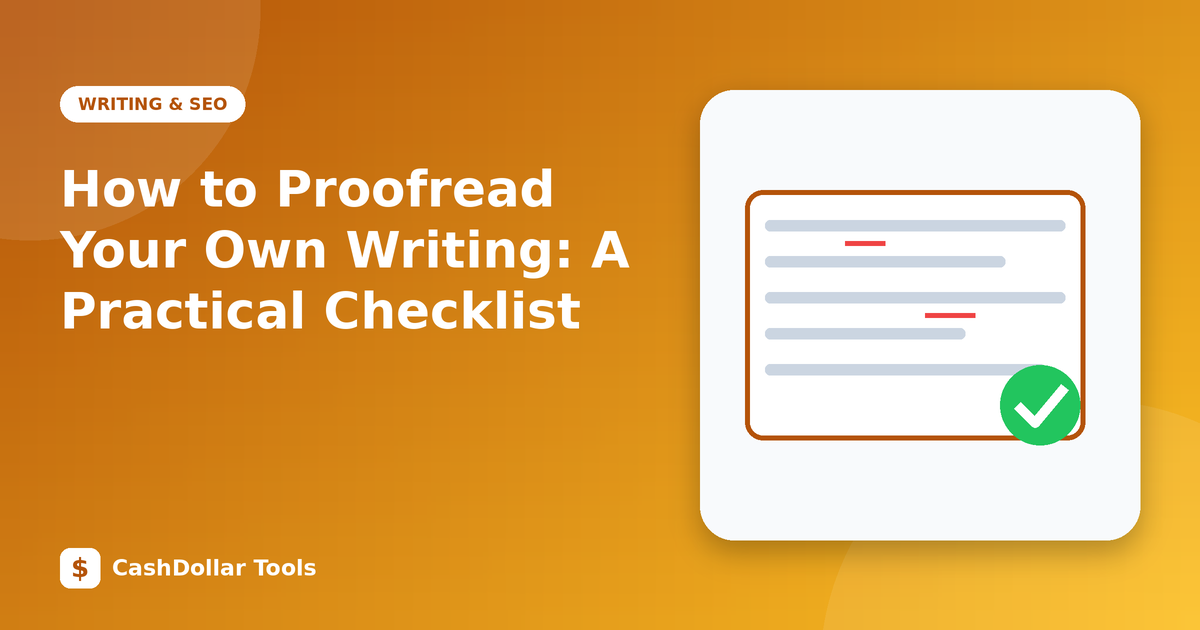
Proofreading your own work is hard because your brain knows what you meant to write and fills in the gaps. The trick is to change how you see the text so mistakes stand out.
Take a break first
Leave the draft alone for at least a few hours, ideally overnight. Distance makes errors visible. If you are under deadline, even a 20-minute walk helps.
Change the format
- Print it or view it in a different font and size. A new layout interrupts autopilot reading.
- Read aloud. Your mouth trips over missing words, clumsy phrasing and repeated sounds that your eyes skip.
- Read backward, sentence by sentence, to check spelling and grammar without being distracted by the story.
Work in passes
Trying to catch everything at once fails. Make separate passes:
- Big picture: does the structure make sense? Is anything missing or repeated?
- Clarity: cut waffle, split long sentences, replace vague words with specific ones.
- Grammar and punctuation: subject-verb agreement, tense consistency, commas, apostrophes.
- Spelling and typos: especially names, brand words and homophones (their/there, affect/effect).
- Facts and numbers: check dates, figures, quotes and links against the source.
- Formatting: consistent headings, spacing, capitalisation and list style.
Know your personal weak spots
Keep a list of mistakes you make often, such as "its/it's" or missing apostrophes. Search your document specifically for those.
Use tools, but do not trust them blindly
Spell checkers catch typos but not wrong words that are spelled correctly. Grammar tools can suggest changes that alter your meaning. Use them as a second pair of eyes, never as the final judge. A text-comparison tool is excellent for reviewing exactly what changed between two drafts.
Look for duplicates
Repeated words ("the the"), repeated sentences after copy-and-paste and repeated lines in lists are common. Searching for double spaces and repeated words is a quick win.
Get another reader
If the stakes are high, ask someone else to read it. Give them a specific question, for example "Is the second paragraph clear?", rather than a vague "Any thoughts?".
A final checklist
- Title and headings accurate
- Names, numbers and links verified
- Consistent spelling variant (UK or US)
- No leftover notes or placeholder text
- Read once more on a different device
Good proofreading is a habit of patience. It is the cheapest way to look professional.